
Diagnostic Sample Pickup and Delivery: A Complete Guide
- Topic
- Sample Pickup & Transportation
- Published
- Reading time
- 8 min read
By Phlebify Operations Team · Last updated
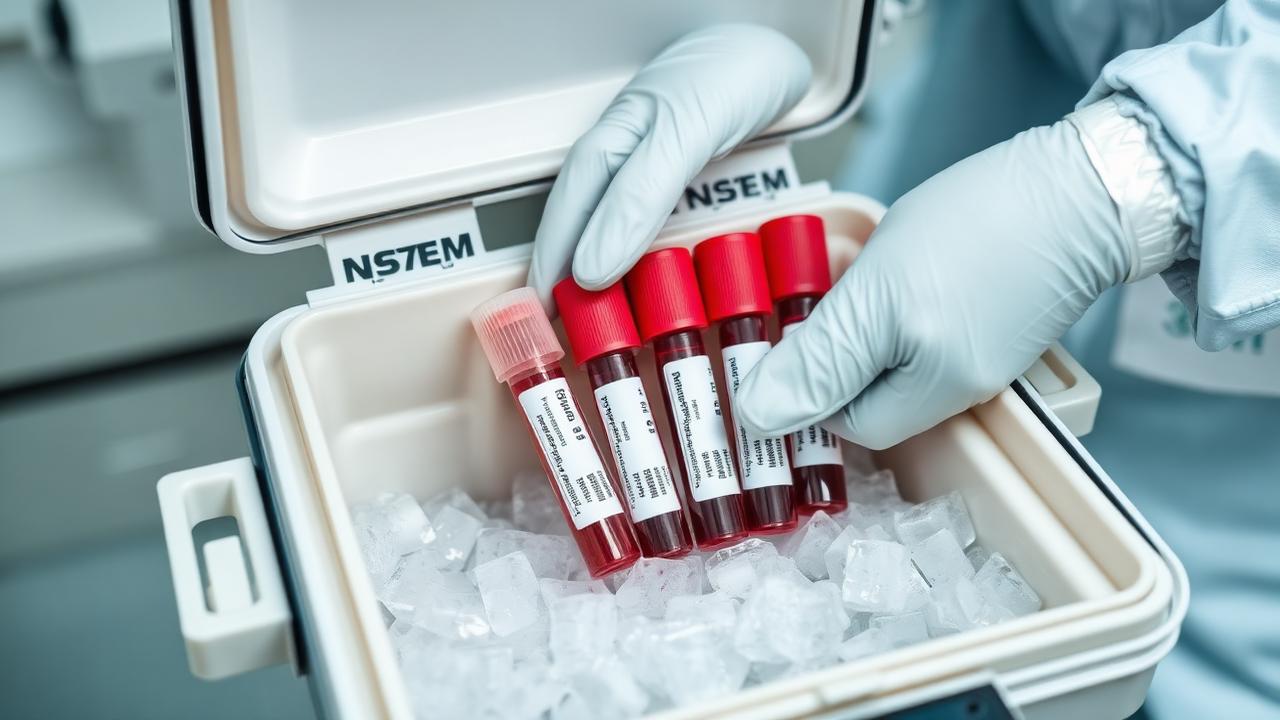
Sample pickup rarely appears on a laboratory dashboard, which is odd, because it is where a large share of pre-analytical delay accumulates. The draw is fast and visible. The wait afterwards is slow and invisible.
This guide covers how diagnostic sample pickup and delivery is actually organised: the pickup models available to a lab, how routing decisions are made, what custody and temperature discipline require, and what a clean laboratory handover looks like.
What sample pickup covers
Diagnostic sample pickup is the movement of collected specimens from their point of origin to a receiving laboratory. Points of origin vary more than most teams plan for: patient homes after a home collection, collection centres, clinics, hospital wards, corporate camp sites and intermediate handover points.
Delivery is the other half — the formal transfer into the laboratory, with receipt time and specimen condition recorded. Between them sits routing, custody and condition control.
Three pickup models
Most diagnostic operations use a combination. The choice is a trade-off between elapsed time per sample and cost per sample.
| Model | How it works | Best suited to |
|---|---|---|
| Collector-carried | The phlebotomist who drew the sample carries it to the laboratory or handover point. | Low-density areas, urgent or stability-sensitive specimens, small volumes |
| Runner pickup | A dedicated runner collects from multiple collectors or collection points along a planned route. | Dense urban clusters with steady daily volume |
| Hub consolidation | Samples meet at an agreed handover point, then travel together to the laboratory. | High volume across a wide area, where cost per sample matters |
Phlebify supports collector-carried movement and coordinated pickup to agreed handover points; the model applied is confirmed per partner during onboarding.
What good routing accounts for
A pickup route is not a shortest-path problem. It is a constrained scheduling problem, and the constraints matter more than the distance:
- Specimen stability windows for the tests already collected
- Realistic travel effort at that time of day, not straight-line distance
- Laboratory reception cut-offs and shift patterns
- Collection density — how many samples are within reach of one detour
- Where the collector's remaining visits are, so pickup does not strand their route
- Temperature-sensitive items that cannot wait for a batch to fill
This is the same travel model that drives collection assignment, which is why we treat it as one problem rather than two. See distance intelligence.
Runner operations, in practice
A runner's day is decided the night before. Where volume is expected, at what times, and against which laboratory cut-offs. Where that planning does not happen, the runner becomes reactive — chasing calls, doubling back, and arriving at the lab after cut-off with a full bag.
Two habits separate a functioning runner operation from a chaotic one. First, every pickup is recorded at the moment it happens, with a named handing-over party. Second, the runner's route is treated as revisable during the day: if a stability-sensitive sample enters the network at 11 am, the plan should change, not the sample's chances.
Custody: the part that protects the result
Every specimen should have exactly one accountable holder at any moment, and each transfer of that accountability should be recorded. That is the whole of chain of custody, and it is what makes a rejected sample diagnosable rather than merely regrettable.
In a digital workflow, custody transfer is captured at the point of handover, with time and identity attached to the request. In a paper workflow, it is a signature on a manifest — workable, but only as reliable as the manifest's storage. Chain of custody in diagnostic sample collection goes deeper.
Condition control during pickup
Pickup is where condition drifts, because it is the longest uncontrolled period in the specimen's life. The controls are unglamorous and effective:
- Correct primary and secondary containment, with absorbent material
- Upright positioning to reduce agitation and haemolysis risk
- Temperature-appropriate carriers, conditioned before the route begins
- Physical separation of ambient, chilled and frozen items
- No unnecessary transfers between carriers
- A recorded start time for movement, so idle time is visible
A clean laboratory handover
At the receiving laboratory, five things should happen in order:
- Physical count reconciled against the manifest or the digital request list
- Specimen identity verified against the requisition
- Condition inspected — leakage, haemolysis, clotting, temperature, volume
- Receipt time recorded, and any rejection recorded with a reason code
- Accepted specimens accessioned into the LIMS, closing the logistics request
Reason codes are the underrated item on that list. Without them, rejection is an anecdote; with them, it is a trend you can fix.
Common pickup failures and what actually fixes them
Samples sitting with a collector after the last visit: fix by measuring idle time per request, not by asking collectors to hurry. Missed laboratory cut-offs: fix by planning routes backwards from the cut-off rather than forwards from the first pickup.
Untraceable specimens: fix by recording every custody transfer digitally, so 'the runner has it' becomes a timestamped fact rather than a guess. Repeated rejections from one area or one collector: fix with reason-coded rejection data and targeted retraining.
How Phlebify handles pickup
Phlebify coordinates sample movement as part of the collection request rather than as a separate errand. The collection, the custody events and the handover all sit on one record, so your team can see where a specimen is without calling anyone.
For the service overview, see diagnostic sample pickup and delivery and sample transportation.
Frequently asked questions
What is the difference between sample pickup and sample transportation?
Pickup is the act of collecting specimens from their point of origin and starting their journey. Transportation is the movement itself, including routing, containment and condition control. In practice they are managed as one workflow.
Should urgent samples wait for a consolidated pickup?
No. Stability-sensitive and urgent specimens should be routed directly, with consolidation reserved for routine tests where cost per sample matters more than a small time saving.
How is a sample traced during pickup?
Through recorded custody transfers. Each transfer captures who handed over, who received and when, against the collection request — so the current holder is always answerable from the record.
Does Phlebify provide sample pickup separately from collection?
Pickup is coordinated as part of the collection workflow we manage for partner laboratories. Scope for any additional pickup requirement is confirmed with your team during onboarding rather than assumed.
Related reading
- Diagnostic sample transportation guide
- Cold chain management for diagnostic samples
- Diagnostic Sample Pickup and Delivery
- Digital Collection Tracking
Browse every article in the Phlebify diagnostic operations blog.