
Chain of Custody in Diagnostic Sample Collection
- Topic
- Diagnostic Logistics
- Published
- Reading time
- 7 min read
By Phlebify Operations Team · Last updated
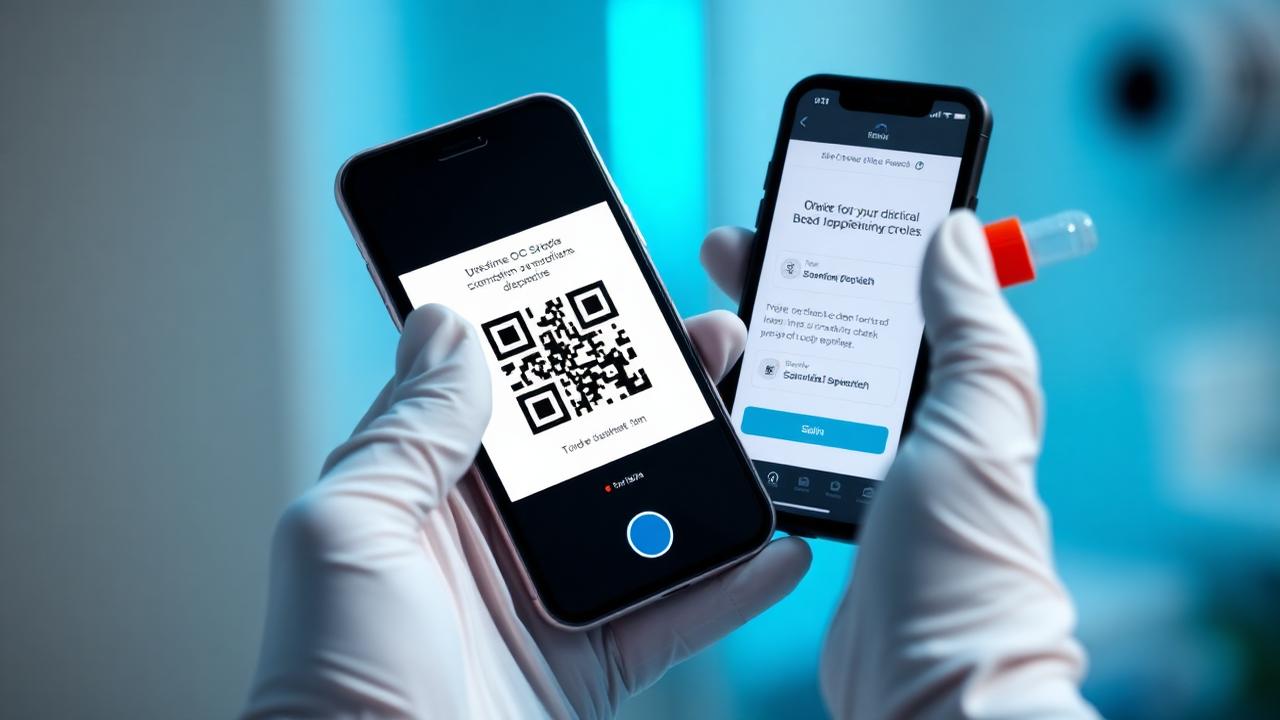
Chain of custody is a simple idea with unforgiving consequences: at every moment between collection and analysis, exactly one party is accountable for a specimen, and every transfer of that accountability is recorded.
In hospital collection this is comparatively easy — short distances, controlled environments, few handoffs. In home collection it is genuinely difficult, and it is precisely where custody discipline earns its value.
Why it matters beyond compliance
The obvious reason to maintain custody records is accountability. The more useful reason is diagnosis of your own operation. When a sample is rejected for haemolysis, a custody trail tells you whether it spent ninety minutes in a car boot or twelve minutes in a conditioned carrier. Without that trail, every rejection is attributed to whoever is easiest to blame, and nothing improves.
The second practical benefit is patient trust. A patient who is told exactly when their sample was collected, when it moved and when the laboratory received it is a patient who does not need reassurance calls.
The events worth recording
A workable custody record captures these events, each with time and identity:
- Collection request created, with patient and requisition reference
- Collector assigned
- Patient identity confirmed at the point of collection
- Specimen collected and labelled, with collection time
- Specimen packed, with containment and temperature category
- Movement started toward the laboratory or handover point
- Custody transferred — handing party, receiving party, time and place
- Laboratory receipt, with condition assessment
- Rejection or acceptance, with reason code where rejected
Nine events. Fewer than that and gaps appear; many more and collectors stop recording accurately, which is worse than not recording at all.
Where custody breaks in home collection
The recurring failure modes are predictable, which makes them preventable:
- Tubes labelled away from the patient, at the vehicle or the hub
- Verbal handovers between collector and runner with no record
- One collector carrying another collector's samples informally
- Samples left at a reception desk or with a security guard
- Manifests completed retrospectively at the end of a shift
- Paper records that exist but cannot be retrieved when questioned
- Reassignment mid-route with no note of who holds what
Labelling is the foundation
Custody begins with identity. A specimen whose identity depends on someone's recollection has no custody chain, however well the subsequent transfers are documented.
The rule is unambiguous: tubes are labelled at the point of collection, in the patient's presence, and checked against the requisition before the collector leaves. Everything downstream depends on this being non-negotiable.
Digital custody, and why it changes behaviour
Paper manifests work when volume is low and storage is disciplined. They fail at scale, and they fail retrospectively — you discover the gap when you need the record.
Digital capture attaches each custody event to the request as it happens, with a timestamp nobody has to remember. Phlebify records collection and handover events digitally, including QR-enabled steps in the workflow, so the trail is available while the sample is still moving rather than reconstructed afterwards. See digital collection tracking.
There is a behavioural effect worth naming: transfers that must be recorded tend to happen promptly and in the right place. Custody discipline improves punctuality as a side effect.
Paper versus digital custody
| Aspect | Paper manifest | Digital custody record |
|---|---|---|
| Timestamp reliability | Written from memory, often at shift end | Captured at the moment of the event |
| Retrieval | Depends on physical filing | Queryable against the request |
| Visibility during transit | None until the manifest arrives | Available to the operations desk live |
| Audit readiness | Reconstructive | Continuous |
| Failure mode | Lost or illegible sheets | Skipped scans if the workflow is too heavy |
Custody and recollections
Recollection decisions depend on custody data. If a sample arrives haemolysed and the record shows a two-hour ambient hold, the corrective action is a routing change, and the recollection is the operation's cost to own. If the record shows a clean twenty-minute journey, the issue is more likely the draw technique, and the corrective action is training.
Without the trail, both cases produce the same outcome — an argument and a repeat visit for the patient. Recollection handling develops this further.
How Phlebify approaches custody
Every collection Phlebify coordinates carries a request-level trail: assignment, collection, packing, movement and handover. Partner laboratories can see that trail rather than requesting it.
For the wider workflow, see the diagnostic logistics platform and home sample collection.
Frequently asked questions
Is chain of custody legally required for routine diagnostic samples?
Requirements vary by test type, accreditation standard and jurisdiction, and are stricter for legal or employment-related testing. Irrespective of the minimum requirement, traceability is standard good practice for any diagnostic specimen.
What is the minimum custody record for a home collection?
Collector identity, collection time, patient identity verification, movement start time, each custody transfer with both parties and time, and laboratory receipt time with condition.
Do QR codes improve chain of custody?
They reduce transcription error and make each event cheap to record, which is why compliance improves. The record itself still depends on the workflow being followed at the right moment.
Who holds custody when a sample waits at a handover point?
Custody should never be ambiguous. Either the handing party retains it until a named receiving party accepts it, or the handover point itself has an accountable custodian who records receipt.
Related reading
- How diagnostic sample logistics works
- How to track diagnostic samples from collection to lab
- Digital Collection Tracking
- Diagnostic Logistics Platform
Browse every article in the Phlebify diagnostic operations blog.