Quality protocols
Defined draw order, tube selection, mixing and labelling practice applied consistently across collections.

Collection capacity where and when your requests actually arrive.
Phlebotomy outsourcing means sourcing the collection workforce — and the coordination around it — from a partner network instead of employing and rostering collectors yourself.
For diagnostic laboratories in Indian cities, the decision is usually forced by geography and demand shape: requests arrive across a wide area in a narrow morning window, which is the hardest pattern for a fixed in-house roster to serve economically.
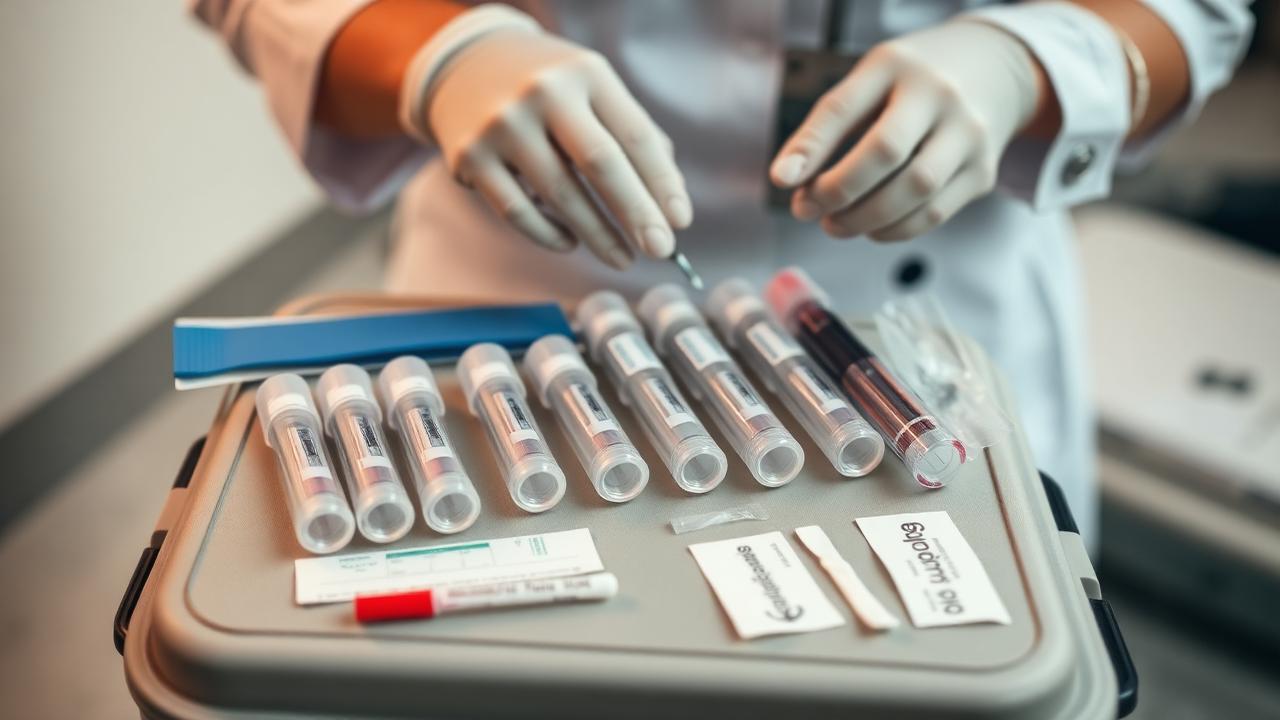
Across partner conversations, the same constraints recur — and none of them are about clinical capability:
Phlebotomists in the network are verified and trained before they receive requests, and work to defined collection protocols.
Each collection is matched to a collector using availability, location and realistic travel effort, not manual calling.
Visits are sequenced so travel between them is workable, which is what decides whether promised windows hold.
Identity checks, protocol-based draw, labelling at the patient's side, digital status capture and recorded handover to your lab.
Defined draw order, tube selection, mixing and labelling practice applied consistently across collections.
Collector availability across supported cities, with serviceability confirmed per address rather than promised by pin code.
Morning peaks, weekend variation and campaign spikes absorbed by the network instead of your roster.
Request-level states so your coordination team reads status instead of calling collectors.
Movement to your laboratory or an agreed handover point, with the transfer recorded.
Insufficient volume, difficult draws and rejected specimens routed through a defined recollection path.
| Consideration | In-house team | Outsourced network |
|---|---|---|
| Cost behaviour | Largely fixed | Follows volume |
| Coverage across a metro | Constrained by headcount per zone | Drawn from network availability |
| Absence and attrition risk | Falls on your roster the same morning | Absorbed by the network |
| Peak-hour capacity | Sized by roster | Shared capacity at peak |
| Coordination effort | Your operations desk | Within the Phlebify workflow |
| Protocol consistency | Directly managed by your team | Defined protocols with recorded collection events |
We say this to prospective partners plainly: if your collection volume is dense, predictable and concentrated in a small area, an in-house team is often the cheaper answer, and you should keep it.
Outsourcing earns its place where volume is spread, variable or growing faster than hiring — and as an overflow layer for the mornings your own roster cannot cover. Most of our partners use it that way rather than as a replacement.
Sourcing the collection workforce and the coordination around it from a partner network rather than employing and rostering phlebotomists yourself. The laboratory raises requests; the network performs and reports the collections.
Yes. Phlebotomists are verified and trained before they receive requests, and work to defined collection protocols with collection events recorded digitally.
Assignment weighs collector availability, current location and realistic travel effort to the patient address, rather than a coordinator calling collectors in sequence.
Yes, and that is a common arrangement. Labs frequently keep an in-house core for their densest zone and use the network for peaks, spread-out addresses and new areas.
We currently work with partners in Hyderabad, Bangalore, Mumbai and Delhi NCR, and confirm serviceability for a specific address at the time of the request.
Tell us about your collection volumes and cities — we'll walk you through how the network would support your operations.