
Cold Chain Management for Diagnostic Samples
- Topic
- Sample Pickup & Transportation
- Published
- Reading time
- 7 min read
By Phlebify Operations Team · Last updated
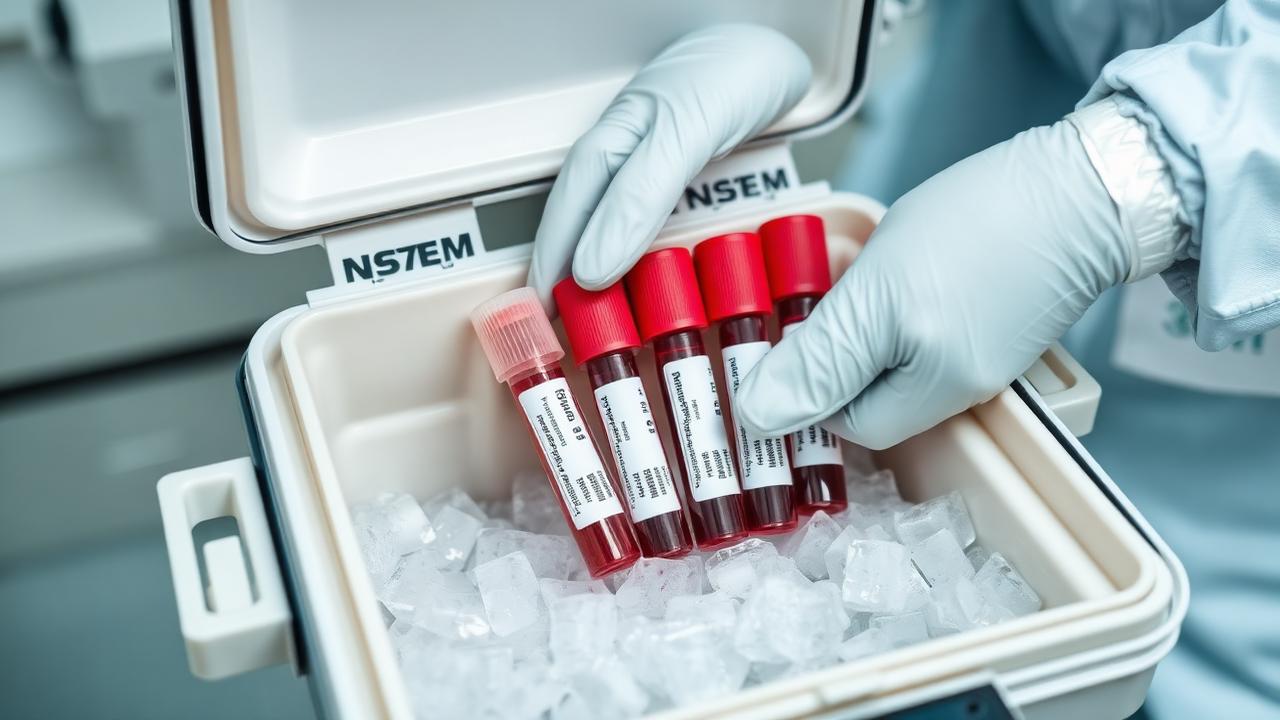
Cold chain failures are hard to see. A delayed sample announces itself; a sample that spent forty minutes at 34°C in a parked two-wheeler looks perfectly normal on arrival and quietly produces an unreliable result.
This article covers what cold chain management means for diagnostic samples in home collection, what the practical controls are, and how excursions should be handled and documented. It is operational guidance, not a substitute for your laboratory's own validated acceptance criteria — the assay's requirements always take precedence.
Cold chain is a stability problem, not a temperature preference
Every analyte has a stability profile: a window of time and temperature within which the measured value remains representative. Cold chain management exists to keep specimens inside that window, which means the answer is never simply 'colder is better'. Some specimens are damaged by chilling; whole blood samples for certain tests must not be refrigerated at all.
The correct starting point is therefore your test menu, not your carrier inventory. Each test category should map to a defined transport temperature category and a maximum time to receipt, sourced from the assay's requirements.
Transport categories in practice
Most home collection operations resolve to three transport categories. Specific temperature and time limits must come from your laboratory's validated requirements for each assay.
| Category | Typical handling | Operational discipline required |
|---|---|---|
| Ambient / controlled room temperature | Insulated carrier protecting against ambient heat, no active cooling | Shade discipline, no vehicle boot storage, minimise idle time |
| Chilled | Conditioned carrier with cold packs, specimen isolated from direct contact | Pre-condition packs, use a barrier layer, avoid freezing the specimen |
| Frozen | Specialised handling with validated packaging where the assay requires it | Confirm feasibility before accepting the request; do not improvise |
Where an assay's handling requirement cannot be met reliably, the honest operational answer is to say so before collection rather than to attempt it.
The controls that actually matter in the field
Indian summer conditions punish sloppy handling faster than any protocol document suggests. The controls that make a measurable difference are simple:
- Condition carriers and cold packs before the route starts, not during it
- Never store specimens in a vehicle boot or under direct sunlight
- Use a barrier layer between cold packs and tubes to prevent freezing
- Keep ambient, chilled and frozen items physically separated
- Open carriers as few times as possible during the route
- Start movement promptly after collection — idle time is a temperature risk, not just a delay
- Record the transport category on the request so the receiving lab can verify it
Idle time is a cold chain issue
Operations teams tend to file idle time under turnaround time. In summer conditions it belongs under cold chain as well, because a carrier's holding capacity is finite. A conditioned box protects a specimen for a defined period, and every additional minute of waiting consumes that budget.
This is why we treat routing and temperature as one problem. Assigning and routing against realistic travel effort — see distance intelligence — is also a condition control, not only a punctuality measure.
Handling a temperature excursion
Excursions will occur. What separates a controlled operation from a careless one is the response:
- Record the excursion — duration and estimated exposure — against the request, immediately.
- Do not discard the specimen unilaterally; the laboratory decides acceptability.
- Notify the receiving laboratory before arrival so a decision can be prepared.
- Apply the laboratory's documented acceptance criteria per assay.
- Where recollection is required, initiate it as an operational cost with a clear patient communication.
- Log a reason code and review the route or handling step that caused it.
Concealed excursions are far more damaging than reported ones, because they produce results that nobody knows to distrust.
Documentation that is worth keeping
For each specimen: the transport category applied, collection time, movement start time, receipt time and any excursion recorded. That set is enough to investigate a rejection and to spot a recurring route problem.
Where continuous temperature monitoring is used, the log should attach to the request rather than living in a separate device history that nobody reconciles. Custody and condition records belong together — see chain of custody.
How Phlebify handles this
Phlebify coordinates collection and sample movement with the transport requirement attached to the request, and confirms handling feasibility with partner laboratories during onboarding rather than assuming it per test.
See sample transportation for the service scope, and for diagnostic labs to discuss your test menu.
Frequently asked questions
Should all blood samples be transported chilled?
No. Chilling is inappropriate for several assays and can itself invalidate a result. Transport temperature must follow the requirement for each specific test as validated by the receiving laboratory.
How long can a sample stay in a conditioned carrier?
It depends on the carrier, ambient conditions and how often it is opened. Treat carrier holding capacity as a finite budget and validate it for your own conditions rather than assuming a fixed figure.
What is the most common cold chain mistake in home collection?
Cold packs that were not conditioned before the route began, followed closely by specimens held in a vehicle while the collector completes further visits.
Does a temperature excursion always mean recollection?
No. The receiving laboratory applies its acceptance criteria for the analyte concerned. The operational obligation is to report the excursion accurately so that decision can be made properly.
Related reading
- Diagnostic sample pickup and delivery guide
- How labs can improve sample transportation
- Sample Transportation
- Diagnostic Logistics Platform
Browse every article in the Phlebify diagnostic operations blog.