
What Is Diagnostic Logistics? A Complete Guide for Laboratories
- Topic
- Diagnostic Logistics
- Published
- Reading time
- 8 min read
By Phlebify Operations Team · Last updated
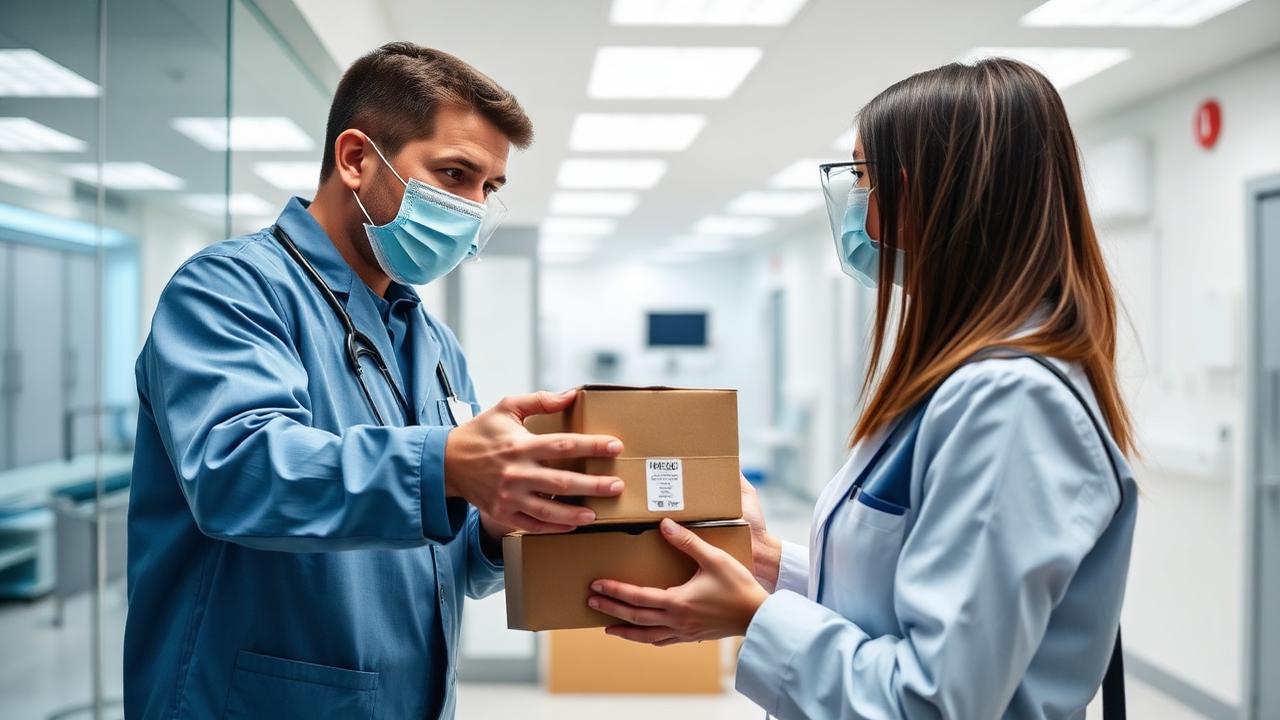
Most laboratory conversations about turnaround time focus on the analytical phase — instrument throughput, reagent availability, technician shifts. But for a lab running home collections, the majority of elapsed time between a test being ordered and a report being released is spent outside the laboratory entirely.
That outside-the-lab portion is diagnostic logistics: the coordination of people, samples, distances and records from the moment a collection is requested to the moment the laboratory formally receives the specimen. This guide explains what the discipline actually covers, where it tends to break in Indian cities, and how diagnostic businesses structure it.
A working definition
Diagnostic logistics is the operational layer that moves a diagnostic sample — and the information attached to it — from the point of collection to the point of analysis, with identity, condition and accountability preserved at every step.
Read that definition carefully, because three things are being managed at once, not one. The physical specimen has to move. The record of who collected what, when and from whom has to move with it. And the sample's condition has to stay within the limits the assay tolerates. A logistics operation that moves tubes quickly but loses the requisition detail has not succeeded; neither has one with perfect paperwork and a four-hour delay on a potassium sample.
What diagnostic logistics covers
In a lab that offers home collection, the logistics scope is broader than most teams initially map. It usually includes:
- Collection request intake from the lab, clinic, hospital or booking channel
- Serviceability and slot confirmation for the patient address
- Phlebotomist assignment and dispatch
- Route and travel planning between visits
- The collection visit itself, including patient identification and labelling
- Specimen packaging and temperature handling
- Sample pickup and movement toward the laboratory
- Formal laboratory handover and accessioning
- Status visibility for the lab's coordination team
- Exception handling: failed visits, reschedules, spillage, recollections
Phlebify exists to run that scope as one connected workflow rather than ten disconnected ones. See the diagnostic logistics platform page for how the layer is structured.
Why diagnostic logistics is hard for laboratories
Laboratories are built to be excellent at controlled, repeatable, indoor work. Logistics is the opposite: uncontrolled, variable and outdoors. A lab can standardise an assay to two decimal places and still be unable to standardise whether a patient in a Mumbai high-rise answers the intercom at 7:10 am.
The second difficulty is that logistics failures are invisible until they are expensive. A collection that has not happened yet looks identical to a collection that is running late, unless someone is tracking state. Most labs discover the problem when the patient calls, which is the worst possible detection mechanism — it is late, it is emotive, and it consumes coordination staff.
The third difficulty is that logistics does not scale linearly with headcount. Doubling collections does not require twice the coordination; it requires considerably more, because each additional collector multiplies the assignment decisions, the travel interactions and the exception paths.
The six stages of a diagnostic logistics workflow
Whatever tooling a lab uses, the same six stages exist. Naming them explicitly is the first step to controlling them.
- Request — the order is created with patient address, test requirement, fasting and timing constraints.
- Assignment — a specific collector is matched to the request based on availability, location and realistic travel effort. See AI dispatch.
- Collection — patient identity is confirmed, the draw is performed to protocol, and tubes are labelled against the requisition.
- Custody — the specimen enters a documented chain of custody with a recorded holder at all times. See chain of custody.
- Movement — the sample travels to the receiving laboratory, directly or via an agreed handover point.
- Handover and accessioning — the lab formally accepts the specimen, and the request closes on the logistics side.
Where time actually goes
The exact split varies by city, test mix and time of day, but the shape of the problem is consistent: pre-analytical logistics dominates elapsed time even though it consumes the least management attention.
| Phase | What is happening | Main risk to control |
|---|---|---|
| Request to assignment | Order intake, serviceability check, collector matching | Manual assignment delay; unrealistic slot promises |
| Assignment to arrival | Collector travel across the city | Travel distance and traffic underestimated at assignment time |
| At the patient location | Identification, draw, labelling, status update | Patient unavailability; address inaccuracy; labelling errors |
| Collection to handover | Specimen movement, temperature control, custody records | Idle time held by the collector; condition drift |
| Handover to accessioning | Lab receipt, verification, entry into the LIMS | Batch queueing at reception; mismatch against the requisition |
Distance is the variable most operations underestimate
In practice, the single biggest determinant of whether a collection window holds is not collector productivity — it is travel effort. Two requests four kilometres apart on a map can be twenty minutes apart at 11 am and fifty minutes apart at 6 pm. Assignment logic that treats distance as a straight line will keep producing schedules that look feasible and are not.
This is why Phlebify treats travel effort as a first-class input to dispatch rather than an afterthought. Distance intelligence exists specifically so that a slot offered to a lab is a slot that can realistically be met.
The exception paths that decide your service quality
Well-run diagnostic logistics is mostly about how cleanly the abnormal cases are handled. The recurring ones are:
- Patient not available at the confirmed window
- Address incomplete, wrong or unreachable (gated societies, unnamed lanes, tower/flat ambiguity)
- Patient has not fasted, or has already eaten before an early slot
- Difficult draw or insufficient sample volume requiring recollection
- Tube breakage, spillage or haemolysis identified at receipt
- Requisition mismatch — the tubes drawn do not match the tests ordered
- Collector delay cascading through the rest of their route
Each of these needs a defined owner, a defined next action and a recorded outcome. Where they are handled by ad-hoc phone calls, the same failure repeats indefinitely because nothing is measured.
Where technology genuinely helps — and where it does not
Technology does not collect blood. It cannot make a patient answer the door, and it cannot shorten a road. What it can do is remove the coordination work that currently sits on people, and make the state of every request legible without a phone call.
Concretely, that means three things: assignment decisions made against availability and travel effort instead of memory; a status trail per request so nobody has to ask 'where is this one?'; and digital capture of collection and handover events so the record follows the sample instead of trailing behind it.
The reason this matters commercially is that coordination cost is what stops labs from growing home collection. Labs rarely stop because demand ran out; they stop because the operations desk cannot absorb any more calls.
How Phlebify fits
Phlebify operates as the outsourced collection and logistics layer for diagnostic laboratories, hospitals and healthcare providers in India. Your lab raises the request; we assign a verified phlebotomist, coordinate the visit, record the collection and handover, and return the sample to your laboratory.
If you are evaluating whether to build this capability in-house or partner for it, the comparison in home collection outsourcing sets out the trade-offs honestly, and for diagnostic labs explains how partnerships are structured.
Frequently asked questions
Is diagnostic logistics the same as medical courier service?
No. A medical courier moves a package between two points. Diagnostic logistics also covers collection request intake, phlebotomist dispatch, patient coordination, specimen identity and custody, condition control, laboratory handover and exception handling such as recollections.
Why is diagnostic logistics considered part of the pre-analytical phase?
Because errors introduced during collection, labelling, transport and storage affect the result itself. A correctly analysed sample that was mislabelled or held too long at the wrong temperature still produces an unreliable report.
What should a laboratory measure first?
Start with three measures: time from request to assignment, time from assignment to collection, and time from collection to laboratory receipt. Most labs find one of the three is responsible for the majority of their delay, and it is rarely the one they assumed.
Can a laboratory outsource diagnostic logistics without losing control?
Yes, provided status and custody events are visible to your team as they happen. Control comes from visibility and defined handover points, not from employing the collector directly.
Related reading
- How diagnostic sample logistics works
- Chain of custody in diagnostic sample collection
- Diagnostic Logistics Platform
- Distance Intelligence
Browse every article in the Phlebify diagnostic operations blog.