
How AI Dispatch Can Improve Home Sample Collection
- Topic
- Technology
- Published
- Reading time
- 7 min read
By Phlebify Operations Team · Last updated
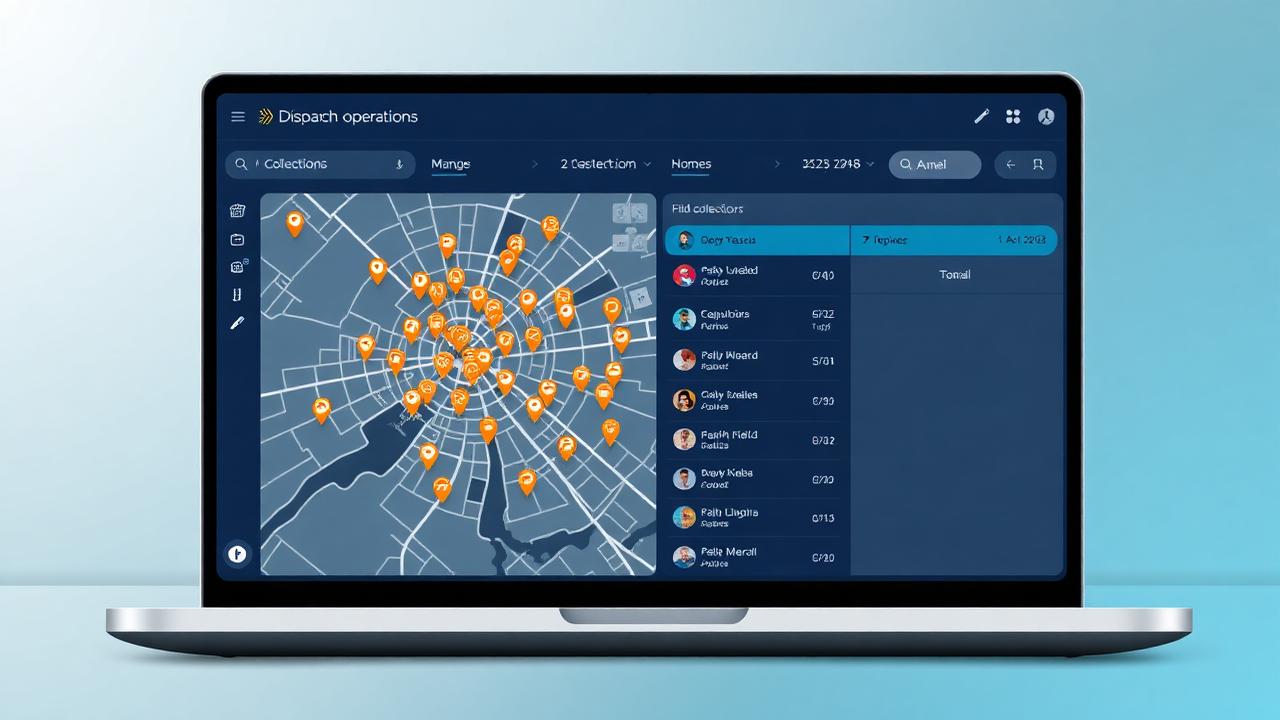
A patient books a blood test, the laboratory needs someone to collect the sample, so find the nearest available phlebotomist. In practice it is rarely that simple.
A collector may already have an appointment. Another may be closer but moving in the opposite direction. One may be carrying a heavy workload while another has capacity. Traffic, time slots and operational constraints all affect the decision — and as volume grows, making these calls manually becomes difficult.
Factors that can influence assignment
Dispatch is the decision about which phlebotomist should handle which collection order. A useful decision considers more than distance:
- Location — how far the phlebotomist is from the patient by road
- Availability — whether the collector is genuinely free in the required window
- Existing workload — how many orders the collector already holds
- Route — whether the new order fits logically into the collector's day
- Timing — whether the collector can realistically reach the patient in the slot
- Operational constraints — specific requirements attached to the order
Why nearest is not always best
Consider two available collectors for the same order:
| Collector | Distance | Current workload | Next appointment |
|---|---|---|---|
| Phlebotomist A | 2 km | 5 orders | 20 minutes away |
| Phlebotomist B | 4 km | 1 order | Available immediately |
A nearest-person rule picks A. An operationally informed decision may pick B. The objective is not the closest person, but the most suitable available person.
Manual dispatch becomes difficult at scale
With fifty home collection requests, an operations team has to repeatedly work out who is available, where they are, which order they should receive, whether they can reach the patient in time, whether they already hold another collection, and whether the assignment creates unnecessary travel.
Doing that through calls, spreadsheets and messaging groups gets harder with every additional collector. Automation reduces the volume of repetitive decisions a human has to make.
AI dispatch and human operations
AI dispatch does not mean removing people from the workflow. A better model is that technology handles repetitive allocation while operations teams handle exceptions and judgement calls.
The system assigns an order automatically; if the patient changes timing, a collector becomes unavailable, an address changes or a collection fails, the operations team intervenes. That combination of automation and oversight is what makes the model workable in healthcare.
How intelligent dispatch can affect turnaround time
Assignment is one of the earliest events in a collection workflow. If assignment takes twenty minutes, that delay propagates through everything after it. If assignment happens quickly and sensibly, the collector starts moving toward the patient sooner.
The effect is not only speed. Better assignment can also reduce unnecessary travel and improve collector utilisation. See reducing sample-to-lab turnaround time.
AI dispatch with distance intelligence
Dispatch becomes more useful when combined with accurate travel distance. The system can read order location, collector location, travel distance, availability and existing workload together, rather than assigning the first person who answers.
See what distance intelligence means in healthcare logistics.
What happens when something goes wrong
A dispatch system earns its place through exception handling:
- Phlebotomist unavailable — the order is reassigned
- Patient requests a different time — the order returns to scheduling
- Wrong address — corrected before reassignment
- Collection fails — recollection is initiated through the operational workflow
What labs should look for in a dispatch system
- Real-time assignment
- Collector availability management
- Location intelligence
- Workload balancing and reassignment
- Order visibility and status tracking
- Exception management and audit logs
- Integration with the lab's existing systems
The goal is a system that makes operations more predictable, not simply more automated. See Phlebify's dispatch technology.
Final takeaway
Home sample collection is fundamentally a field logistics problem. As order volume increases, deciding who handles each order becomes one of the most consequential operational choices in the day.
AI-powered dispatch moves a laboratory from manual assignment to intelligent, data-informed allocation. It does not replace operations teams — it gives them a better system for managing the complexity behind every collection.
Frequently asked questions
What is AI dispatch in healthcare?
AI dispatch uses data such as location, availability and operational constraints to help assign field healthcare tasks.
Does AI dispatch always assign the nearest phlebotomist?
Not necessarily. A good dispatch system can consider multiple variables rather than distance alone.
Can operations teams override automated assignments?
A well-designed system should allow operational intervention when exceptions require human judgement.
Can AI dispatch help reduce travel?
Intelligent assignment can potentially reduce unnecessary travel by considering location and existing workload.
Related reading
- AI dispatch technology
- Distance intelligence in healthcare logistics
- Real-time diagnostic sample tracking
- Reduce sample-to-lab turnaround time
Browse every article in the Phlebify diagnostic operations blog.