
How Diagnostic Labs Can Reduce Sample-to-Lab Turnaround Time
- Topic
- Operations
- Published
- Reading time
- 7 min read
By Phlebify Operations Team · Last updated
When a laboratory says its turnaround time is too long, the instinct is to look at the analyser. For home collection work, that is usually the wrong end of the process. The specimen typically spends far longer getting to the laboratory than being tested in it.
This article breaks pre-analytical turnaround into measurable segments and sets out what actually shortens each one.
Define the clock before improving it
Pre-analytical turnaround should be measured from request created to specimen accessioned, and split into three segments: request-to-assignment, assignment-to-collection, and collection-to-receipt.
Almost every laboratory that measures these three finds that one segment dominates, and it is frequently not the one the team assumed. Improving the wrong segment is the most common source of wasted effort in operations projects.
The three segments and their real causes
| Segment | Usual cause of delay | What shortens it |
|---|---|---|
| Request to assignment | Manual assignment, incomplete order details, no serviceability answer | Validated intake fields and systematic dispatch |
| Assignment to collection | Unrealistic travel assumptions, poor route shape, patient unavailability | Travel-effort-based assignment, confirmation contact, honest windows |
| Collection to receipt | Idle time before movement, batch waiting, missed lab cut-offs | Movement-start timestamps, backward planning from cut-offs, urgency tiering |
Fix intake first — it is the cheapest gain
Orders that arrive without a complete address, a contact number that is answered, or a clear fasting instruction cannot be scheduled efficiently. They also generate the largest downstream cost: a failed visit consumes a slot, a journey and a patient's goodwill.
Make the intake fields mandatory and validated: tower and flat, landmark, reachable phone number, fasting requirement, and the acceptable window. It is unglamorous and it removes a meaningful share of failed visits.
Assign against travel effort, not availability alone
An available collector twelve kilometres away across peak traffic is not a better assignment than a slightly busier collector four kilometres away. Assignment that considers only availability produces schedules that look full and deliver late.
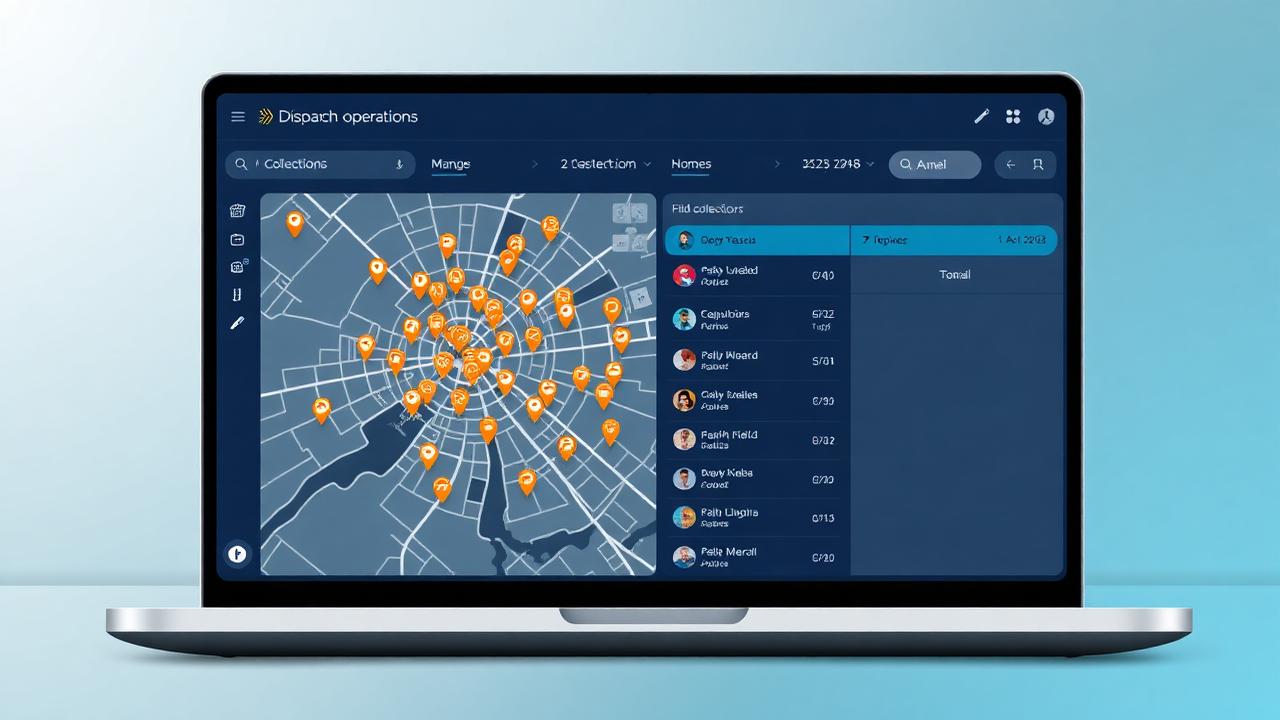
AI dispatch exists to weigh availability, location and realistic travel effort together, using distance intelligence as the travel model.
Attack idle time deliberately
Idle time — collected but not yet moving — is the largest single recoverable block in most home collection operations. Practical levers:
- Record collection-completed and movement-started timestamps for every request
- Cap the number of visits a collector holds samples across before movement begins
- Flag stability-sensitive tests at request time so they route directly
- Plan routes backwards from laboratory reception cut-offs
- Use a handover point when the collector's remaining route is long
- Review the ten worst idle-time requests weekly, not the average
Averages hide the problem. The tail is where patient complaints and rejections come from. Sample logistics and turnaround time covers the transport side in detail.
Reduce repeats, because a recollection resets the clock
No routing improvement survives a recollection. A rejected specimen restarts the entire cycle and doubles the operational cost of that order, so rejection reduction is a turnaround measure as much as a quality one.
Reason-code every rejection and review it by cause: draw technique, volume, labelling, containment, temperature or delay. Each points to a different fix. See recollection handling.
Make status visible so problems surface early
Delay you learn about at 6 pm cannot be fixed. Delay you see at 9:40 am can be reassigned. This is the practical value of real-time tracking: not speed, but earlier detection.
Assign a named person to review stalled states through the day. Tracking without an owner does not shorten anything.
Where a partner helps
Much of the above is coordination capacity rather than clinical work, which is why laboratories increasingly outsource the collection layer instead of staffing it.
Phlebify runs collection, movement and status visibility as one workflow — see the diagnostic logistics platform, home sample collection services, or for diagnostic labs.
Frequently asked questions
What is a realistic pre-analytical turnaround target?
It should be set per test category against the assay's stability requirements and your city's travel realities, not as a single site-wide number. Segment-level targets are more useful than one headline figure.
Which segment is usually worst?
In home collection operations, collection-to-receipt is frequently the largest, driven by idle time and batch waiting rather than the journey itself. Measure before assuming.
Does adding more phlebotomists reduce turnaround time?
Only if the constraint is collector capacity. If the constraint is assignment quality, travel planning or idle time, additional collectors increase coordination load without improving turnaround.
How does recollection affect turnaround measurement?
A recollection restarts the cycle, so it should be reported separately rather than averaged into normal performance. Otherwise a rising repeat rate can hide inside an acceptable-looking average.
Related reading
- How real-time tracking improves sample logistics
- How labs can improve sample transportation
- Diagnostic Logistics Platform
- AI Dispatch
Browse every article in the Phlebify diagnostic operations blog.